Understanding your skin type is the first step towards achieving healthy, glowing, and balanced skin. However, many people use skincare products without knowing whether their skin is oily, dry, combination, normal, or sensitive. Choosing the wrong products can sometimes lead to breakouts, irritation, excessive oiliness, or dryness.
So, how do you identify your skin type at home? Fortunately, you can perform a few simple tests to understand your skin's natural characteristics. In this guide, Minerva Skin Care explains the different skin types, how to identify yours, and how to choose a suitable skincare routine.
What Are the Different Types of Skin?
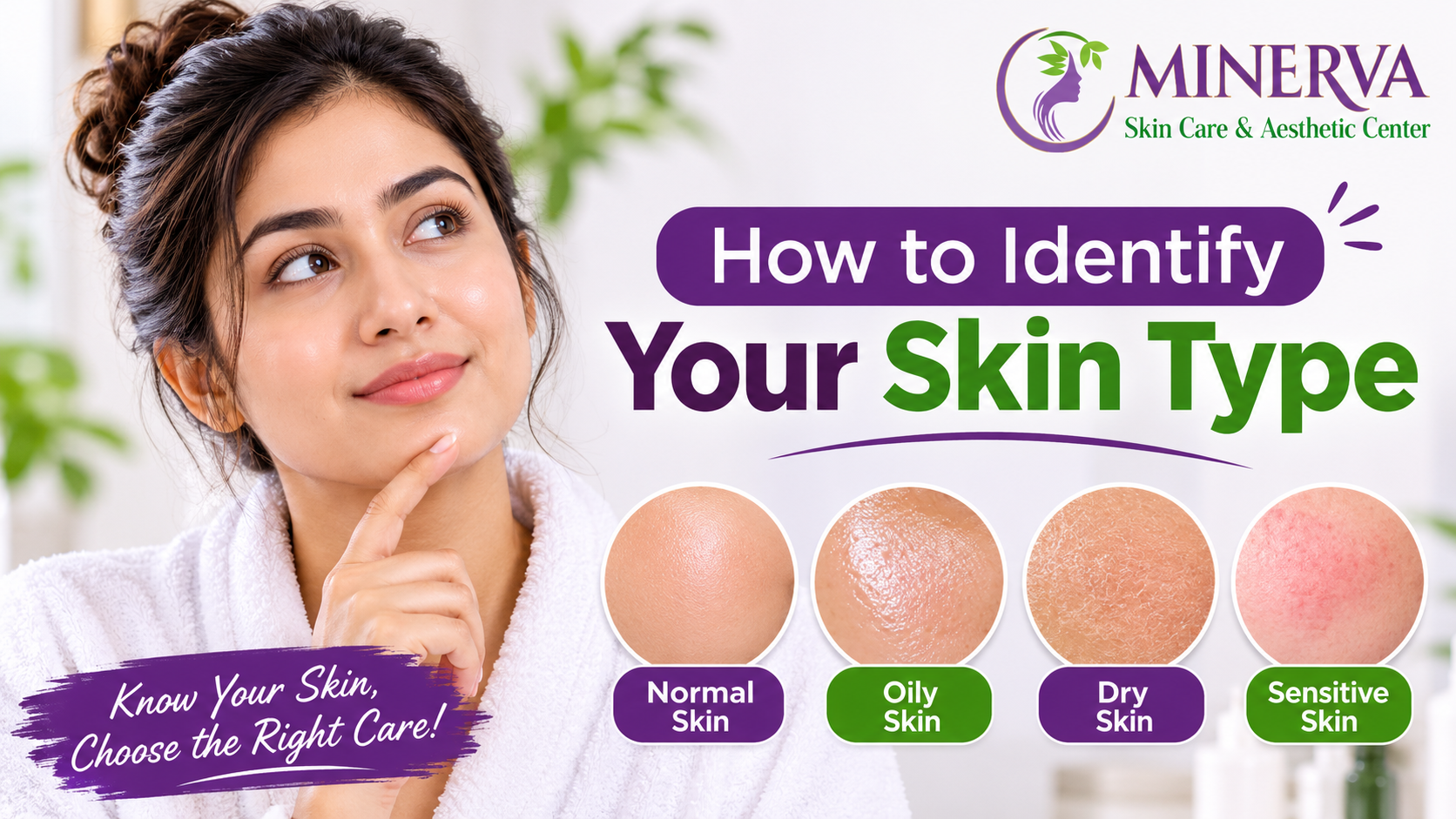
There are five commonly recognized skin types: normal, oily, dry, combination, and sensitive. Each has different characteristics and skincare requirements.
1. Normal Skin
Normal skin is generally well-balanced, meaning it is neither excessively oily nor too dry. It usually has a smooth texture and relatively balanced moisture levels.
Common characteristics:- Smooth and relatively even skin texture.
- Minimal visible pores.
- Balanced oil and moisture levels.
- Occasional breakouts.
- Less frequent irritation.
Skincare tips: Use a gentle cleanser, lightweight moisturizer, and broad-spectrum sunscreen to maintain your skin's natural balance.
2. Oily Skin
Oily skin produces excess sebum, the natural oil produced by the sebaceous glands. This can make the face look shiny, particularly around the forehead, nose, and chin.
Common characteristics:- Shiny or greasy appearance.
- Enlarged or visible pores.
- Frequent blackheads and whiteheads.
- Increased tendency towards acne and breakouts.
- Makeup may not last as long.
Skincare tips: Choose a gentle gel cleanser, non-comedogenic moisturizer, and lightweight sunscreen. Ingredients such as niacinamide and salicylic acid may help manage excess oil and clogged pores.
3. Dry Skin
Dry skin produces less natural oil and may struggle to retain moisture. It can feel uncomfortable, particularly after washing.
Common characteristics:- Tightness or roughness.
- Flaky or peeling patches.
- Dull appearance.
- Fine lines may appear more noticeable.
- Occasional itching or irritation.
Skincare tips: Use a gentle hydrating cleanser and nourishing moisturizer. Look for ingredients such as hyaluronic acid, ceramides, and glycerin to support skin hydration.
4. Combination Skin
Combination skin has characteristics of both oily and dry skin. Typically, the forehead, nose, and chin (T-zone) are oily, while the cheeks may be normal or dry.
Common characteristics:- Oily forehead, nose, and chin.
- Dry or normal cheeks.
- Visible pores around the nose.
- Occasional breakouts in oily areas.
- Different facial areas require different care.
Skincare tips: Use a gentle cleanser and lightweight moisturizer. Apply targeted products according to the needs of different facial areas.
5. Sensitive Skin
Sensitive skin is more reactive to certain skincare products, environmental factors, and weather conditions. It may occur alongside oily, dry, or combination skin.
Common characteristics:- Frequent redness.
- Burning or stinging sensations.
- Itching or irritation.
- Reactions to fragrances or certain ingredients.
- Skin discomfort after using new products.
Skincare tips: Choose fragrance-free, gentle skincare products. Introduce new ingredients gradually and perform a patch test before applying them to your entire face.
How to Identify Your Skin Type at Home
You do not need expensive equipment to identify your skin type. Try these two simple methods at home.
Method 1: The Bare-Face Test
This is one of the easiest ways to understand your natural skin condition.
Follow these steps:- Wash your face with a gentle cleanser.
- Pat your skin dry with a clean towel.
- Do not apply serum, moisturizer, sunscreen, or other skincare products.
- Wait approximately 30–60 minutes.
- Observe how your skin looks and feels.
- Normal skin: Feels comfortable without excessive oiliness or tightness.
- Oily skin: Looks shiny, particularly around the T-zone.
- Dry skin: Feels tight, rough, or flaky.
- Combination skin: The T-zone becomes oily while the cheeks remain dry or comfortable.
- Sensitive skin: May show redness, itching, burning, or irritation.
Remember that this test provides a general indication rather than a medical diagnosis.
Method 2: The Blotting Paper Test
Blotting paper can help you understand how much oil your skin produces.
How to perform the test:- Take a clean blotting paper sheet.
- Gently press it against different areas of your face.
- Check how much oil transfers onto the paper.
- Compare the results from your forehead, nose, cheeks, and chin.
- Little or no oil: Your skin may be dry.
- Oil across most facial areas: Your skin may be oily.
- Oil mainly around the T-zone: You may have combination skin.
- Moderate oil without significant dryness: Your skin may be normal.
Keep in mind that sensitive skin cannot be identified reliably through an oil test alone.
How Does Weather Affect Your Skin Type?
Weather and environmental conditions can influence how your skin behaves. In Bangladesh, humidity, heat, pollution, and seasonal changes may affect oil production and skin hydration.
- Hot and humid weather may make oily skin appear shinier.
- Air conditioning may contribute to skin dryness.
- Seasonal changes may make some skin types feel more sensitive.
- Sun exposure can contribute to pigmentation, premature ageing, and uneven skin tone.
It is important to understand the difference between your underlying skin type and temporary skin conditions. Your skin may feel drier or oilier depending on the environment without your fundamental skin type changing.
How to Choose the Right Skincare Products for Your Skin Type
Once you identify your skin type, choosing suitable skincare products becomes easier. Here is a simple skincare guide:
| Skin Type | Recommended Skincare |
|---|---|
| Normal | Gentle cleanser, moisturizer, and sunscreen. |
| Oily | Gel cleanser, lightweight moisturizer, and niacinamide. |
| Dry | Hydrating cleanser, ceramide moisturizer, and hyaluronic acid. |
| Combination | Gentle cleanser, lightweight moisturizer, and targeted treatments. |
| Sensitive | Fragrance-free cleanser and soothing moisturizer. |
Regardless of your skin type, daily sun protection is essential. Choose a broad-spectrum SPF 30 or higher sunscreen and reapply as directed.
Important: Introduce new skincare products one at a time. If you experience persistent irritation, consult a qualified dermatologist.
Why Is Professional Skin Analysis Important?
Identifying your skin type at home is a helpful starting point, but it does not always reveal underlying skin concerns. A professional skin assessment can help evaluate concerns such as:
- Acne and acne scars.
- Hyperpigmentation and dark spots.
- Uneven skin tone.
- Dehydration and skin texture.
- Fine lines and wrinkles.
- Enlarged pores and excess oil.
- Skin sensitivity and redness.
At Minerva Skin Care, we provide professional skincare guidance to help you understand your skin concerns and explore suitable skincare and aesthetic treatment options. For personalized advice and professional skin assessment, consult our experienced dermatologists and skin care specialists
Whether you are concerned about acne, pigmentation, uneven skin tone, or other skin conditions, a qualified dermatologist can assess your skin and recommend an appropriate treatment plan based on your individual needs.
You can also explore our specialized treatments, including PRP, PRF and GFC treatments and Hair PRP treatment, to learn more about available options for hair restoration and scalp care.
When Should You Visit a Dermatologist?
Consider consulting a dermatologist if you experience:
- Persistent acne or frequent breakouts.
- Severe dryness, itching, or skin irritation.
- Unexplained redness or inflammation.
- Dark spots or pigmentation that are worsening.
- Sudden changes in skin texture or appearance.
- Allergic reactions to skincare products.
If you are unsure which specialist to consult, read our guide on how to choose the best dermatologist in Dhaka. It will help you understand what to consider when selecting the right skin specialist for your needs.
Early professional assessment can help identify the cause of skin concerns and prevent inappropriate product use.
Get Professional Skincare Guidance at Minerva Skin Care
Healthy skin starts with understanding what your skin actually needs. Whether you have oily, dry, normal, combination, or sensitive skin, choosing the right skincare routine can make a meaningful difference.
At Minerva Skin Care, you can explore professional skin consultations and dermatologist-guided skincare solutions to address your individual concerns.
If you are unsure about your skin type or struggling to find suitable products, professional guidance can help you take the right steps towards healthier-looking skin.
Book a skin consultation at Minerva Skin Care and take the first step towards understanding your skin better.
Frequently Asked Questions About Skin Types
1. How can I identify my skin type at home?
Wash your face with a gentle cleanser and wait 30–60 minutes without applying skincare products. Observe your skin. Excessive shine may indicate oily skin, tightness may indicate dry skin, and an oily T-zone with dry cheeks may indicate combination skin.
2. What are the five main types of skin?
The five main skin types are normal, oily, dry, combination, and sensitive. Each type has different characteristics and skincare needs.
3. How do I know if I have oily or dry skin?
Oily skin usually looks shiny and may have enlarged pores or frequent breakouts. Dry skin often feels tight, rough, flaky, or uncomfortable, especially after cleansing.
4. How can I identify combination skin?
If your forehead, nose, and chin become oily while your cheeks remain dry or normal, you may have combination skin.
5. Can my skin type change over time?
Yes. Age, hormones, weather, lifestyle, medications, and environmental conditions can affect how your skin behaves. Your skin may become drier or oilier over time.
6. Is sensitive skin a separate skin type?
Sensitive skin is commonly described as a skin type, but it can also occur alongside oily, dry, normal, or combination skin. It is generally characterized by redness, itching, burning, or irritation.
7. Which skin type is best?
There is no single best skin type. Every skin type has different needs. The goal is to maintain healthy, balanced skin with a suitable skincare routine.
8. Can I have oily and dehydrated skin at the same time?
Yes. Oily skin can also be dehydrated. Dehydration refers to a lack of water in the skin, whereas oiliness relates to sebum production.
9. Where can I get a professional skin consultation in Dhaka?
You can explore professional skin consultation services at Minerva Skin Care in Dhaka. A qualified dermatologist can assess your skin concerns and guide you towards suitable skincare options.