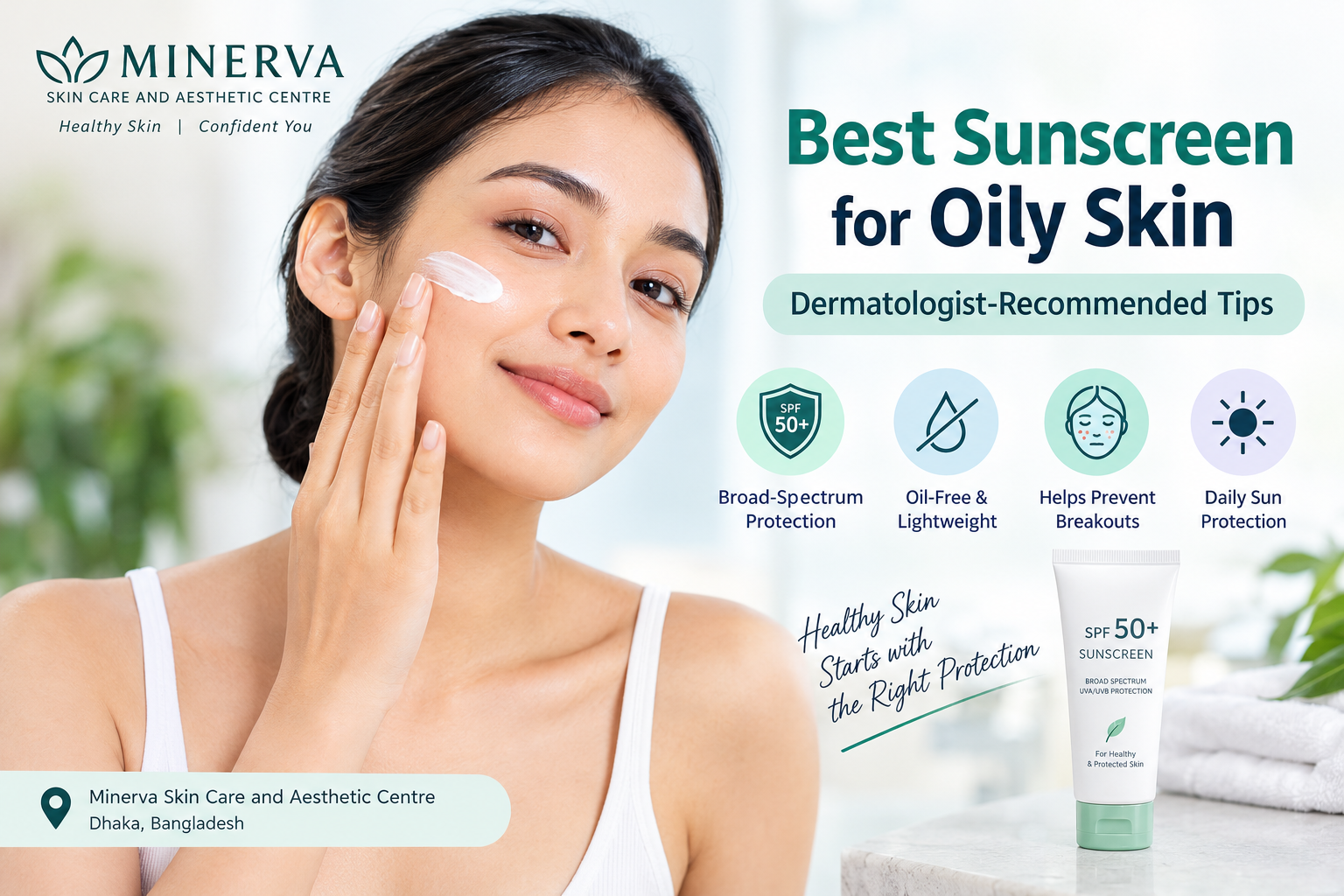
Looking for the best sunscreen for oily skin? Discover how to choose lightweight sun protection, understand SPF, and build a daily skincare routine for oily and acne-prone skin with guidance from Minerva Skin Care and Aesthetic Centre .
What Is the Best Sunscreen for Oily Skin?
The best sunscreen for oily skin is generally a broad-spectrum sunscreen with SPF 30 or higher and a lightweight, non-comedogenic formula. A gel, fluid, or lightweight lotion may feel more comfortable if your skin becomes shiny throughout the day.
According to the American Academy of Dermatology (AAD) , sunscreen should provide broad-spectrum UVA and UVB protection and have an SPF of at least 30. Water resistance is also recommended, particularly for outdoor activities.
If you are exploring sunscreen options, visit the Minerva Skin Care SPF 50 Daily Sunscreen product page to review the product information and determine whether it meets your individual skincare needs.
Which Sunscreen Formula Is Suitable for Oily and Acne-Prone Skin?
1. Gel Sunscreen
Gel sunscreen often has a lightweight feel and may suit people who dislike heavy skincare products. Check the label to ensure it provides the required level of UV protection.
2. Oil-Free Sunscreen
An oil-free formula may feel more comfortable for people concerned about excess shine. However, oil-free does not automatically mean that a product will suit every acne-prone skin type.
3. Non-Comedogenic Sunscreen
Non-comedogenic products are formulated to reduce the likelihood of clogged pores. If you experience frequent breakouts, introduce new products carefully and stop using a product that consistently causes irritation.
4. Mineral Sunscreen
Mineral sunscreens use zinc oxide, titanium dioxide, or both as UV filters. Some people with sensitive skin prefer these formulas, although texture and white cast can vary by product.
Is SPF 50 Sunscreen Good for Oily Skin?
SPF 50 can be a useful choice for daily sun protection, especially when spending time outdoors. However, the SPF rating does not tell you whether a sunscreen is lightweight, matte, or suitable for acne-prone skin. Check the full product label and choose a formula that feels comfortable enough to use consistently.
The U.S. Food and Drug Administration (FDA) explains that sunscreen labels should be read carefully, including broad-spectrum and water-resistance information.
How to Choose Sunscreen for Oily Skin in Bangladesh
In Dhaka's warm and humid conditions, a lightweight sunscreen may be easier to wear comfortably throughout the day. Consider these factors before purchasing a product:
- Choose broad-spectrum protection with SPF 30 or higher.
- Look for a non-comedogenic formula if you are prone to breakouts.
- Consider a gel or fluid texture if you dislike heavy creams.
- Choose a water-resistant product for swimming or heavy sweating.
- Check the ingredients, expiry date, and product authenticity.
- Consider your skin sensitivity and any current acne treatments.
No single sunscreen is best for everyone. A dermatologist can help you select a product suited to your skin concerns and treatment routine.
How to Apply Sunscreen Correctly
- Cleanse your face with a gentle cleanser.
- Apply moisturizer if your skin needs additional hydration.
- Apply sunscreen generously to your face, ears, and neck.
- Follow the product label for application timing before sun exposure.
- Reapply approximately every two hours while outdoors.
- Reapply after swimming, sweating, or towel drying as directed.
- Use shade, protective clothing, and a hat for additional protection.
Read the AAD's complete guide on how to apply sunscreen correctly for further guidance.
Can Sunscreen Cause Acne?
Sunscreen does not automatically cause acne, but some formulations may not suit every person's skin. If breakouts develop after introducing a product, review your skincare routine and consider switching to a lightweight, non-comedogenic formula.
Avoid harsh scrubbing or excessive cleansing. Consult a qualified dermatologist if acne persists, becomes painful, or is accompanied by significant irritation.
Frequently Asked Questions
What is the best sunscreen for oily skin recommended by dermatologists?
A broad-spectrum sunscreen with SPF 30 or higher and a lightweight, non-comedogenic formula is a sensible starting point. The best product depends on your skin type, sensitivity, and daily activities.
Is SPF 50 sunscreen suitable for oily skin?
Yes, SPF 50 can be suitable for oily skin if the formulation feels comfortable and provides the required protection. Look for broad-spectrum coverage and consider a lightweight texture.
Which sunscreen is best for oily and acne-prone skin?
A lightweight, non-comedogenic sunscreen may be a good option. Gel and fluid formulas can feel less heavy, but individual reactions vary.
Should I use sunscreen every day in Dhaka?
Daily sun protection is recommended, including on cloudy days. Apply sunscreen to exposed skin and combine it with shade and protective clothing.
Can sunscreen help prevent dark spots?
Consistent sun protection can help prevent existing pigmentation from becoming darker and reduce additional UV-related skin damage. Persistent pigmentation may require professional assessment.
When should I consult a dermatologist about sunscreen?
Seek professional advice if you experience persistent acne, repeated irritation, unusual sun sensitivity, or worsening pigmentation. A dermatologist can help tailor your skincare routine.
Find the Right Sunscreen for Your Skin
Choosing a sunscreen that suits your skin type is an important part of protecting your skin from sun damage and premature aging. For people with oily skin, a comfortable formula can make daily application easier.
For personalized advice about oily, acne-prone, or sensitive skin, consult a qualified dermatologist.